> ## Documentation Index
> Fetch the complete documentation index at: https://docs.pipevest.com/llms.txt
> Use this file to discover all available pages before exploring further.
# Message Signature
To generate a [message signature](https://www.ietf.org/archive/id/draft-ietf-httpbis-message-signatures-04.html), [cryptographic keys](/concepts/cryptographic-keys) of the ED25519 variants must first be created.
We currently only support
[ED25519](https://datatracker.ietf.org/doc/html/rfc8032) key types.
#### Determine Signature Base
The example signature base below is determined from the [content digest example request](/concepts/http-signature/content-digest#generate-content-digest).
```
"Authorization": Bearer 123
"Content-Digest": sha-512=:RK/0qy18MlBSVnWgjwz6lZEWjP/lF5HF9bvEF8FabDg=:
"Content-Length": 18
"Content-Type": application/json
"X-Client-Id": 123456
"X-Idempotency-Key": 123456
"@method": POST
"@target-uri": https://api.pipevest.com
"@path": /v1/customers
"@query: ?sort=ASC
"@signature-params": ("Authorization" "Content-Digest" "Content-Length" "Content-Type" "X-Client-Id" "X-Idempotency-Key" "@method" "@target-uri" "@path" "@query");keyid="staging-pipevest-ed25519";created=1732893484;expires=1732893584
```
#### Signature Parameters
The field `@signature-params` contains an ordered list of components that make up the signature base. It is made up of two sections, fields and meta data.
`"@signature-params": (fields...);meta`
* [**fields**](#fields): ordered, space (` `) separated and contained within ellipsis `(...)`
* [**meta**](#meta): unorder, semi-colon (`;`) separated and specify additional information about the cryptographic operation
The order in which the fields show up in the signature base **must** match the
fields order in the signature params
#### Generate Message Signature
 Identify the private key for the given environment. You should have one for:
* **Staging**
* **Production**
How to [Generate Cryptographic keys](/concepts/cryptographic-keys#instructions-to-generate-keys)
Use the [instructions here](#determine-signature-base) to determine which fields to include to generate the signature.
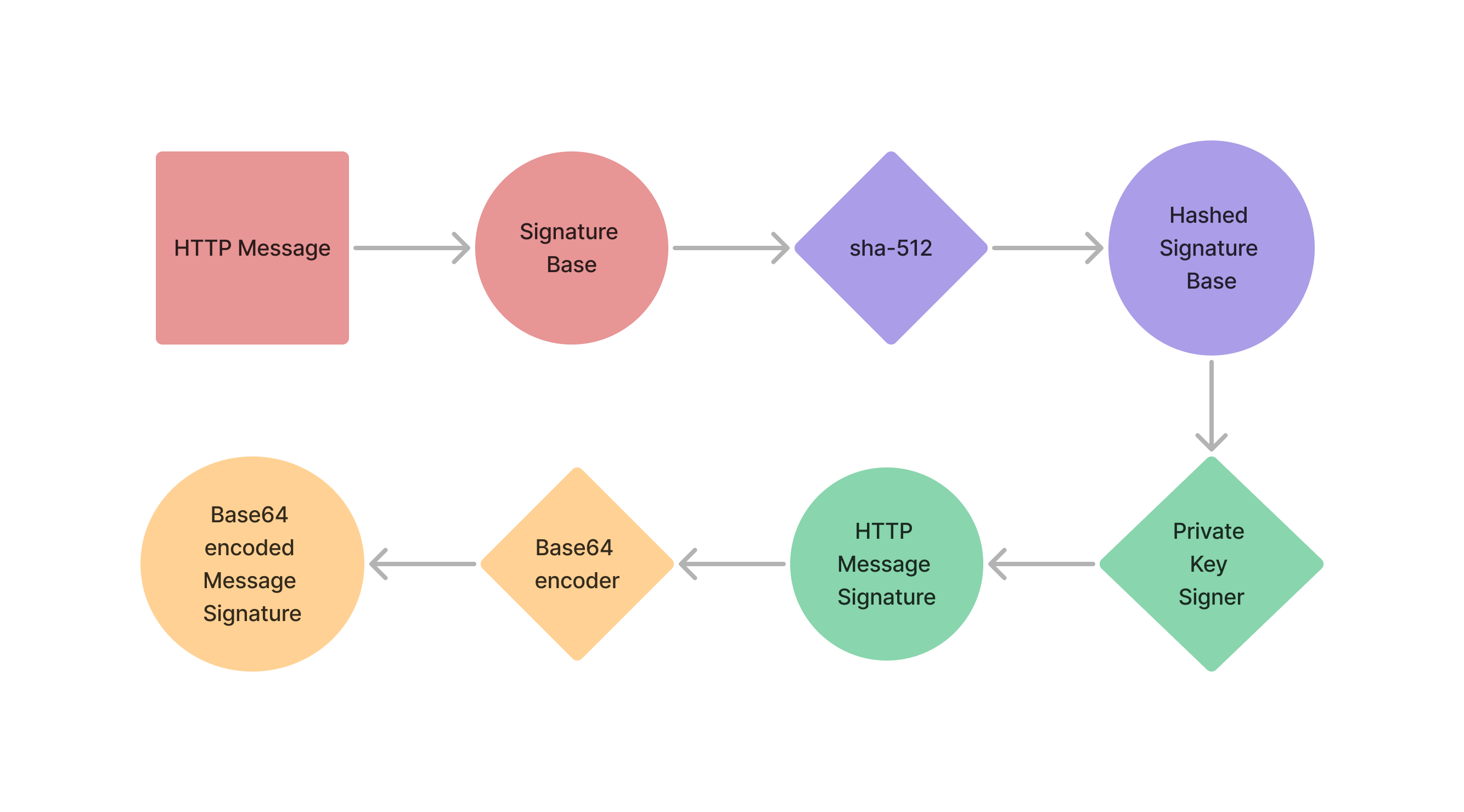
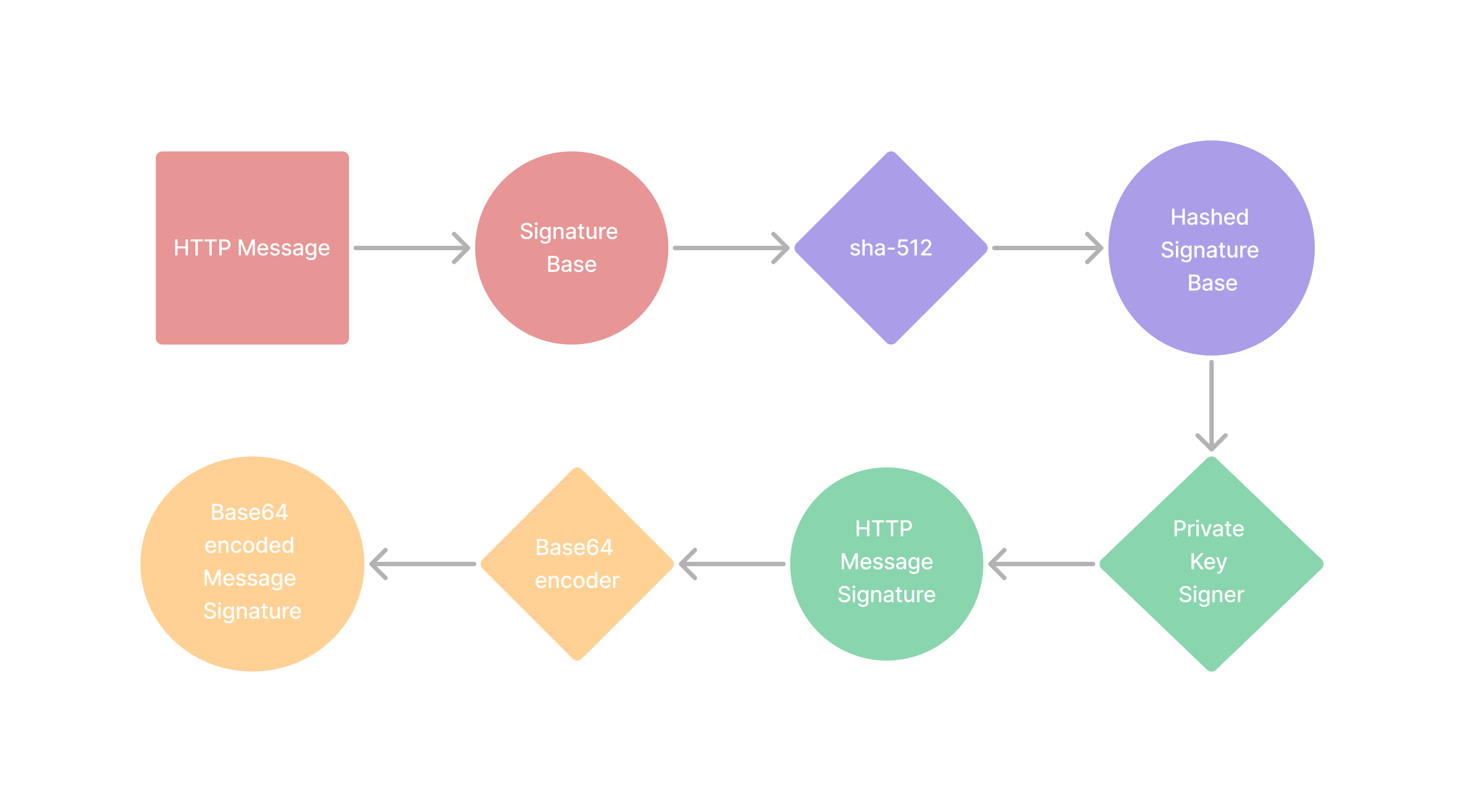
1. Using sha-512, hash the signature base
2. Sign the resulting hash with the environment specific private key.
3. Base64 encode the signed hash, this is the final computed message signature (`computed-signature`).
For the example request below, the `computed-signature` will be `OTEyMjY4...A5NTNDMEQ=`
The signature input is the same as the `@signature-params` and will be passed along the header. The inputs allow for the signature to be recomputed and verified.
Add `Signature` and `Signature-Input` to the request header
* Signature: `sig1=::`
* Signature-Input: `sig1=<@signature-params>`
```bash theme={null}
curl --request POST \
--url https://api.pipevest.com/v1/customers?sort=ASC \
--header 'Content-Digest: sha-512=:RK/0qy18MlBSVnWgjwz6lZEWjP/lF5HF9bvEF8FabDg=:' \
--header 'Content-Length: 18' \
--header 'Content-Type: application/json' \
--header 'Authorization: Bearer 123456' \
--header 'Signature: sig1=:OTEyMjY4...A5NTNDMEQ=:' \
--header 'Signature-Input: sig1=("Content-Type" "Content-Digest" "Content-Length" "Authorization" "X-Client-Id" "X-Idempotency-Key" "@method" "@target-uri" "@path" "@query");keyid="staging-pipevest-ed25519";created=1732893484;expires=1732893584' \
--header 'X-Client-Id: 123456' \
--header 'X-Idempotency-Key: 123456' \
...
--data '{"firstName": "John", "lastName": "Doe"}'
```
#### Verify Message Signature
Identify the private key for the given environment. You should have one for:
* **Staging**
* **Production**
How to [Generate Cryptographic keys](/concepts/cryptographic-keys#instructions-to-generate-keys)
Use the [instructions here](#determine-signature-base) to determine which fields to include to generate the signature.
1. Using sha-512, hash the signature base
2. Sign the resulting hash with the environment specific private key.
3. Base64 encode the signed hash, this is the final computed message signature (`computed-signature`).
For the example request below, the `computed-signature` will be `OTEyMjY4...A5NTNDMEQ=`
The signature input is the same as the `@signature-params` and will be passed along the header. The inputs allow for the signature to be recomputed and verified.
Add `Signature` and `Signature-Input` to the request header
* Signature: `sig1=::`
* Signature-Input: `sig1=<@signature-params>`
```bash theme={null}
curl --request POST \
--url https://api.pipevest.com/v1/customers?sort=ASC \
--header 'Content-Digest: sha-512=:RK/0qy18MlBSVnWgjwz6lZEWjP/lF5HF9bvEF8FabDg=:' \
--header 'Content-Length: 18' \
--header 'Content-Type: application/json' \
--header 'Authorization: Bearer 123456' \
--header 'Signature: sig1=:OTEyMjY4...A5NTNDMEQ=:' \
--header 'Signature-Input: sig1=("Content-Type" "Content-Digest" "Content-Length" "Authorization" "X-Client-Id" "X-Idempotency-Key" "@method" "@target-uri" "@path" "@query");keyid="staging-pipevest-ed25519";created=1732893484;expires=1732893584' \
--header 'X-Client-Id: 123456' \
--header 'X-Idempotency-Key: 123456' \
...
--data '{"firstName": "John", "lastName": "Doe"}'
```
#### Verify Message Signature
 Identify the public key for the given environment. You should have one for:
* **Staging**
* **Production**
For webhook message validation, refer to `Step 1` in [Validate Webhook Message](/concepts/webhook/validation#validate-webhook-message)
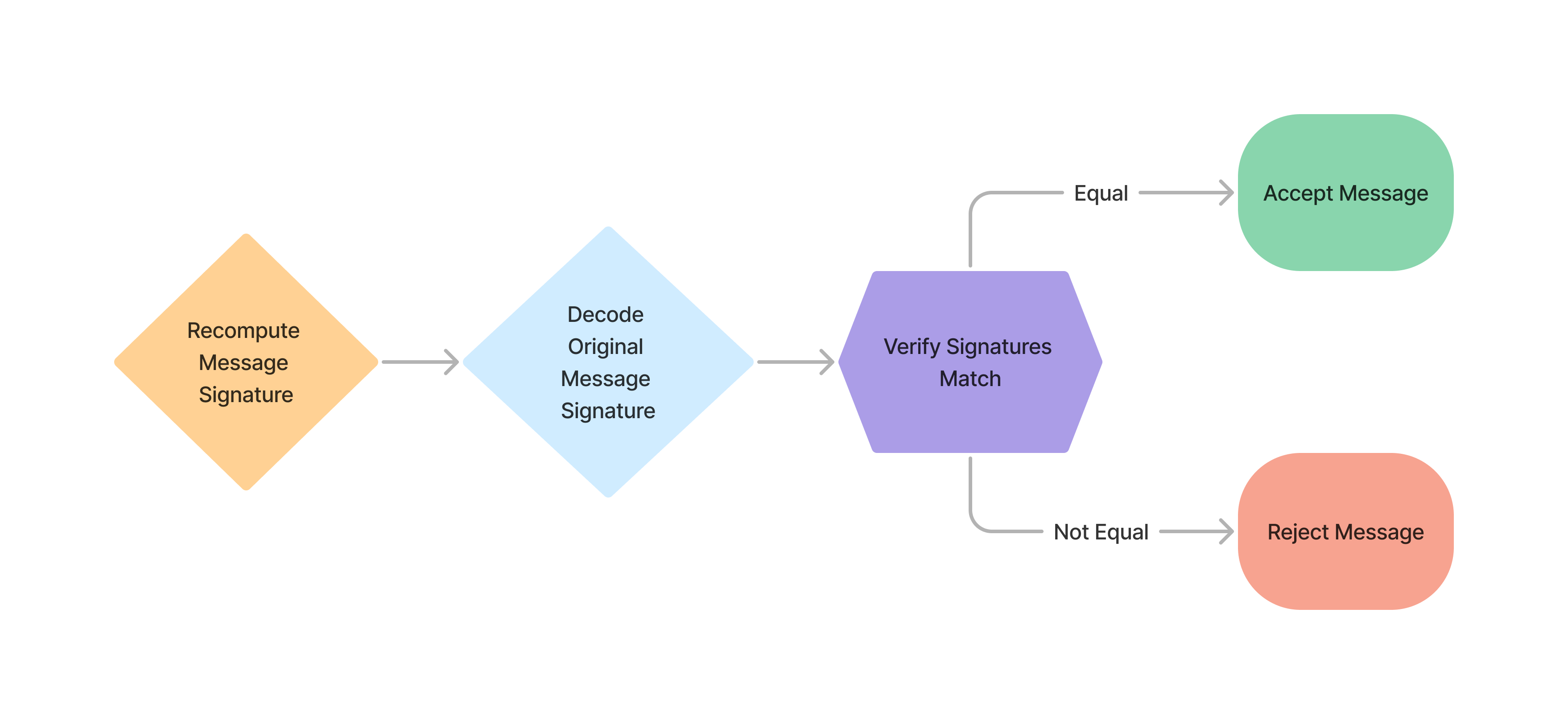
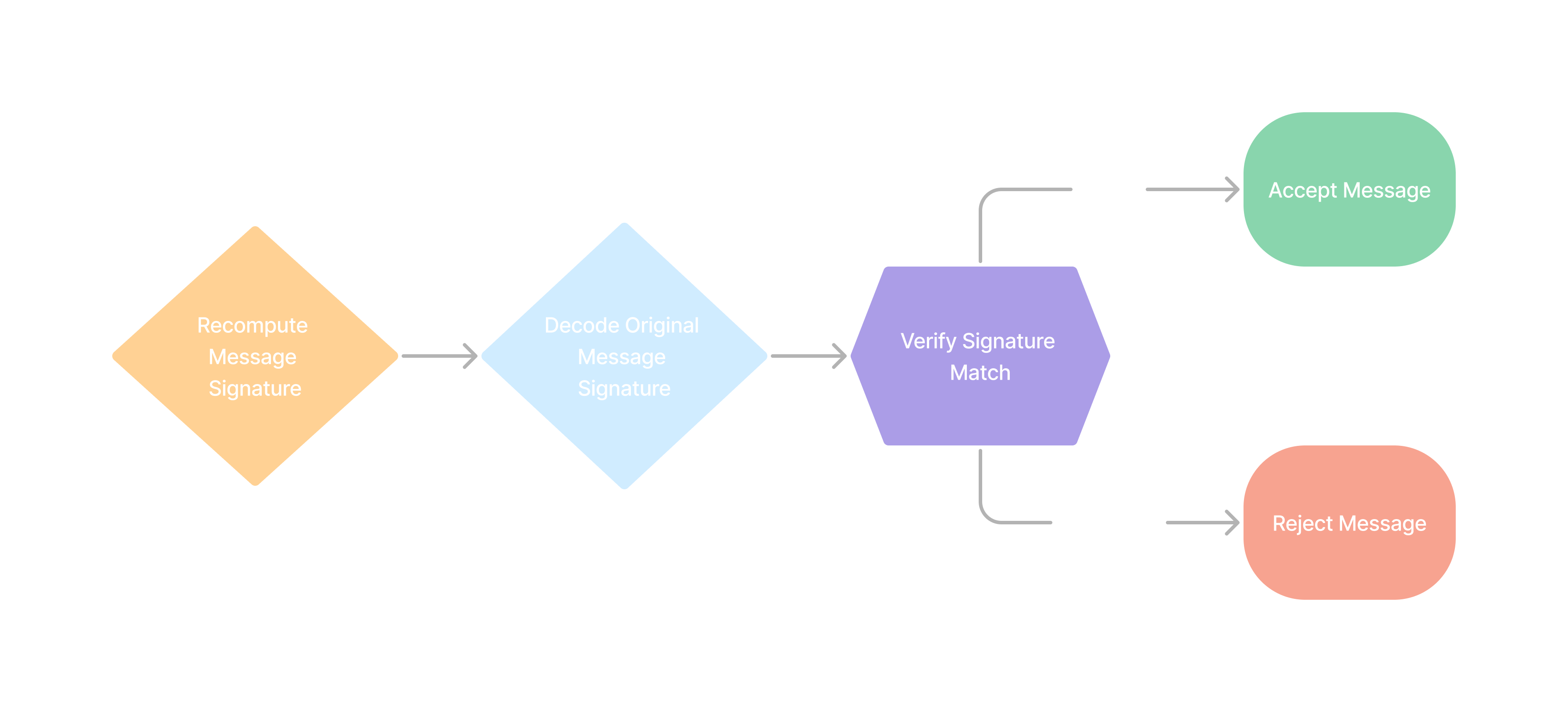
1. Use the `Signature-Input` from the http header to [determine the signature base](#determine-signature-base).
2. Create a `sha-512` digest from the signature base
We will call this `computed-message-signature`.
You will need to strip the `sig1=:` prefix and the `:` suffix to end up with the `header-base64-signature`.
In the example below, the `header-message-signature` equals `OTEyMjY4...A5NTNDMEQ=`
```bash theme={null}
curl --request POST \
--url https://api.pipevest.com/v1/customers \
--header 'Signature: sig1=:OTEyMjY4...A5NTNDMEQ=:' \
....
```
Using a base64 decoder, decode the `header-base64-signature`.
We will call this final result, the `header-message-signature`.
Compare the `computed-message-signature` to the `header-message-signature`.
```
computed-message-signature === header-message-signature
```
Reject the message, if `computed-message-signature` does not equal `header-message-signature`.
#### Example Verification Code:
```javascript theme={null}
import crypto from 'node:crypto'
// Get the Public key
const publicKey = ...
// Get Signature and Signature inputs from the original http message header
const signature = request.headers['Signature']
const signatureInput = request.headers['Signature-Input']
// Recompute message signature using the signature inputs
const computedSignatureBase = `...` // determined using `signatureInput`
const computedMessageSignature = crypto.createHash('sha512').update(computedSignatureBase).digest()
// Decode the signature to get the signed http message
const headerBase64Signature = signature.match(/:(.*):/).pop()
const headerMessageSignature = Buffer.from(headerBase64Signature, 'base64')
// Use public key to verify that computed and header signatures are the same
const isSignatureVerified = crypto.verify(null, computedMessageSignature, publicKey, headerMessageSignature)
```
```python theme={null}
import hashlib
import re
# Get the Public key
public_key = ...
# Get Signature and Signature inputs from the original http message header
signature = request.headers.get("Signature", "")
signature_input = request.headers.get("Signature-Input", "")
# Recompute message signature using the signature inputs
computed_signature_base = `...` # determined using `signature_input`
computed_message_signature = hashlib.sha512().update(computed_signature_base)
# Decode the header signature to get the signed http message
header_base64_signature = re.search(r'\:(.*)\:', signature).group(1)
header_message_signature = base64.b64decode(header_base64_signature)
# Use public key to verify that computed and header signatures are the same
is_signature_verified = ... # use `public_key` to make this determination
```
#### Fields
| Fields | Request Types | Required | Note |
| :------------------ | :-------------------------------------: | -------: | :----------------------: |
| `Content-Type` | `POST`, `PUT`, `PATCH` | Yes | |
| `Content-Digest` | `POST`, `PUT`, `PATCH` | Yes | |
| `Content-Length` | `POST`, `PUT`, `PATCH` | Yes | |
| `Authorization` | `GET`, `POST`, `PUT`, `PATCH`, `DELETE` | Yes | Not required for `/auth` |
| `X-Client-Id` | `GET`, `POST`, `PUT`, `PATCH`, `DELETE` | Yes | Not required for `/auth` |
| `X-Idempotency-Key` | `POST`, `PUT`, `PATCH`, `DELETE` | Yes | |
| `@method` | `GET`, `POST`, `PUT`, `PATCH`, `DELETE` | Yes | |
| `@target-uri` | `GET`, `POST`, `PUT`, `PATCH`, `DELETE` | Yes | |
| `@path` | `GET`, `POST`, `PUT`, `PATCH`, `DELETE` | Yes | |
| `@query` | `GET`, `DELETE` | Yes | |
| `@signature-params` | `GET`, `POST`, `PUT`, `PATCH`, `DELETE` | Yes | |
#### Meta
| Name | Description | Required | Note |
| :-------- | :-------------------------------------------------------: | -------: | :----------------------------: |
| `keyid` | This is the id of the public key sent over to pipevest. | Yes | ex: `staging-pipevest-ed25519` |
| `created` | The unix time when the cryptographic operation took place | Yes | |
| `expires` | Unit time stamp that represents `created + 100 ms` | No | Not needed, but recommended |
Identify the public key for the given environment. You should have one for:
* **Staging**
* **Production**
For webhook message validation, refer to `Step 1` in [Validate Webhook Message](/concepts/webhook/validation#validate-webhook-message)
1. Use the `Signature-Input` from the http header to [determine the signature base](#determine-signature-base).
2. Create a `sha-512` digest from the signature base
We will call this `computed-message-signature`.
You will need to strip the `sig1=:` prefix and the `:` suffix to end up with the `header-base64-signature`.
In the example below, the `header-message-signature` equals `OTEyMjY4...A5NTNDMEQ=`
```bash theme={null}
curl --request POST \
--url https://api.pipevest.com/v1/customers \
--header 'Signature: sig1=:OTEyMjY4...A5NTNDMEQ=:' \
....
```
Using a base64 decoder, decode the `header-base64-signature`.
We will call this final result, the `header-message-signature`.
Compare the `computed-message-signature` to the `header-message-signature`.
```
computed-message-signature === header-message-signature
```
Reject the message, if `computed-message-signature` does not equal `header-message-signature`.
#### Example Verification Code:
```javascript theme={null}
import crypto from 'node:crypto'
// Get the Public key
const publicKey = ...
// Get Signature and Signature inputs from the original http message header
const signature = request.headers['Signature']
const signatureInput = request.headers['Signature-Input']
// Recompute message signature using the signature inputs
const computedSignatureBase = `...` // determined using `signatureInput`
const computedMessageSignature = crypto.createHash('sha512').update(computedSignatureBase).digest()
// Decode the signature to get the signed http message
const headerBase64Signature = signature.match(/:(.*):/).pop()
const headerMessageSignature = Buffer.from(headerBase64Signature, 'base64')
// Use public key to verify that computed and header signatures are the same
const isSignatureVerified = crypto.verify(null, computedMessageSignature, publicKey, headerMessageSignature)
```
```python theme={null}
import hashlib
import re
# Get the Public key
public_key = ...
# Get Signature and Signature inputs from the original http message header
signature = request.headers.get("Signature", "")
signature_input = request.headers.get("Signature-Input", "")
# Recompute message signature using the signature inputs
computed_signature_base = `...` # determined using `signature_input`
computed_message_signature = hashlib.sha512().update(computed_signature_base)
# Decode the header signature to get the signed http message
header_base64_signature = re.search(r'\:(.*)\:', signature).group(1)
header_message_signature = base64.b64decode(header_base64_signature)
# Use public key to verify that computed and header signatures are the same
is_signature_verified = ... # use `public_key` to make this determination
```
#### Fields
| Fields | Request Types | Required | Note |
| :------------------ | :-------------------------------------: | -------: | :----------------------: |
| `Content-Type` | `POST`, `PUT`, `PATCH` | Yes | |
| `Content-Digest` | `POST`, `PUT`, `PATCH` | Yes | |
| `Content-Length` | `POST`, `PUT`, `PATCH` | Yes | |
| `Authorization` | `GET`, `POST`, `PUT`, `PATCH`, `DELETE` | Yes | Not required for `/auth` |
| `X-Client-Id` | `GET`, `POST`, `PUT`, `PATCH`, `DELETE` | Yes | Not required for `/auth` |
| `X-Idempotency-Key` | `POST`, `PUT`, `PATCH`, `DELETE` | Yes | |
| `@method` | `GET`, `POST`, `PUT`, `PATCH`, `DELETE` | Yes | |
| `@target-uri` | `GET`, `POST`, `PUT`, `PATCH`, `DELETE` | Yes | |
| `@path` | `GET`, `POST`, `PUT`, `PATCH`, `DELETE` | Yes | |
| `@query` | `GET`, `DELETE` | Yes | |
| `@signature-params` | `GET`, `POST`, `PUT`, `PATCH`, `DELETE` | Yes | |
#### Meta
| Name | Description | Required | Note |
| :-------- | :-------------------------------------------------------: | -------: | :----------------------------: |
| `keyid` | This is the id of the public key sent over to pipevest. | Yes | ex: `staging-pipevest-ed25519` |
| `created` | The unix time when the cryptographic operation took place | Yes | |
| `expires` | Unit time stamp that represents `created + 100 ms` | No | Not needed, but recommended |